
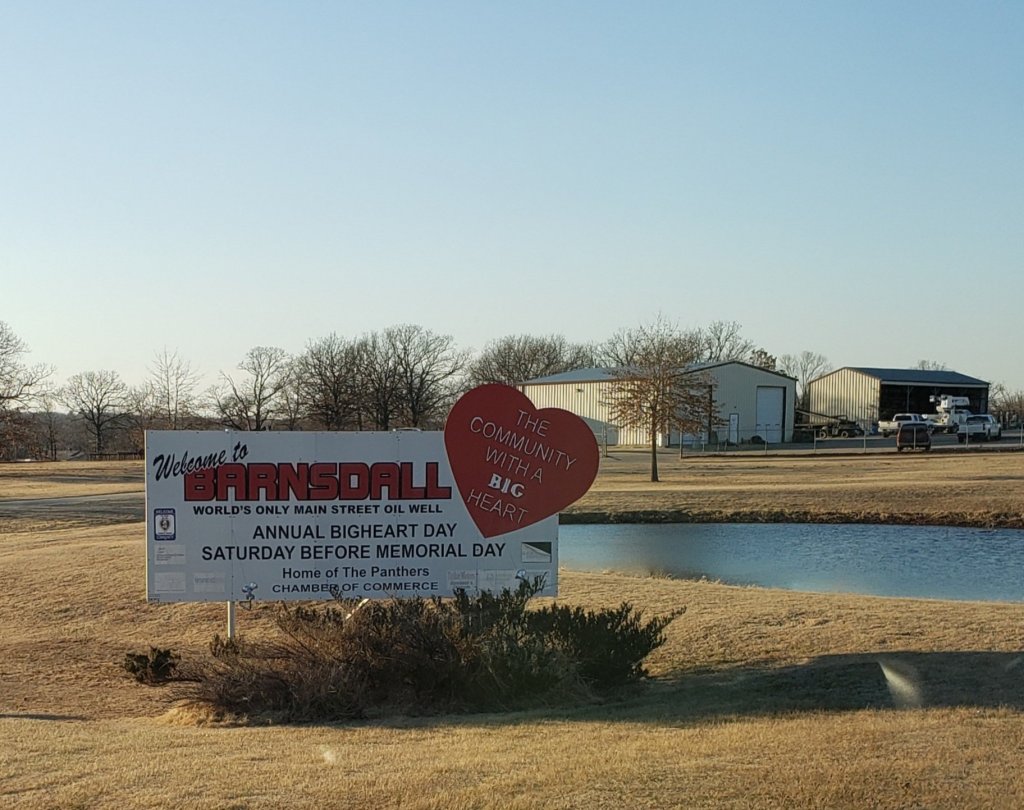
The main reason I drove into Barnsdall is that it has the world’s only Main Street oil well. It was even featured on the Ripley’s Believe It or Not program.
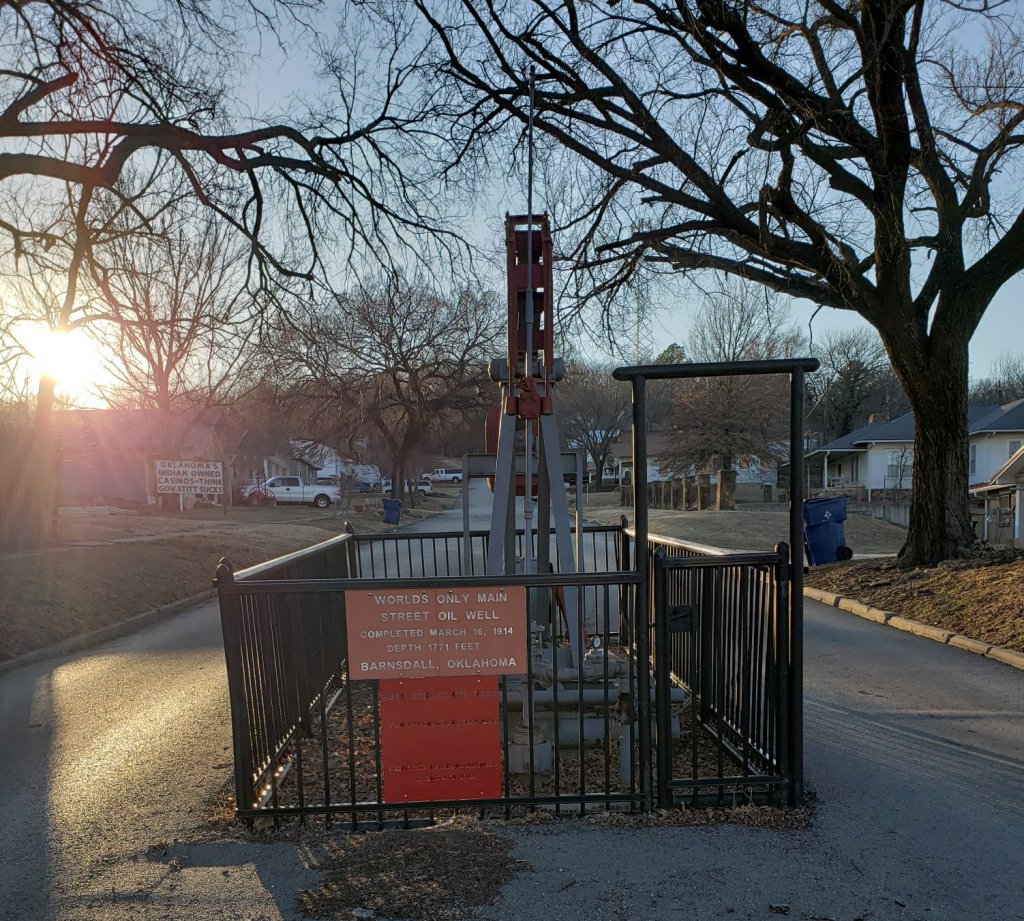
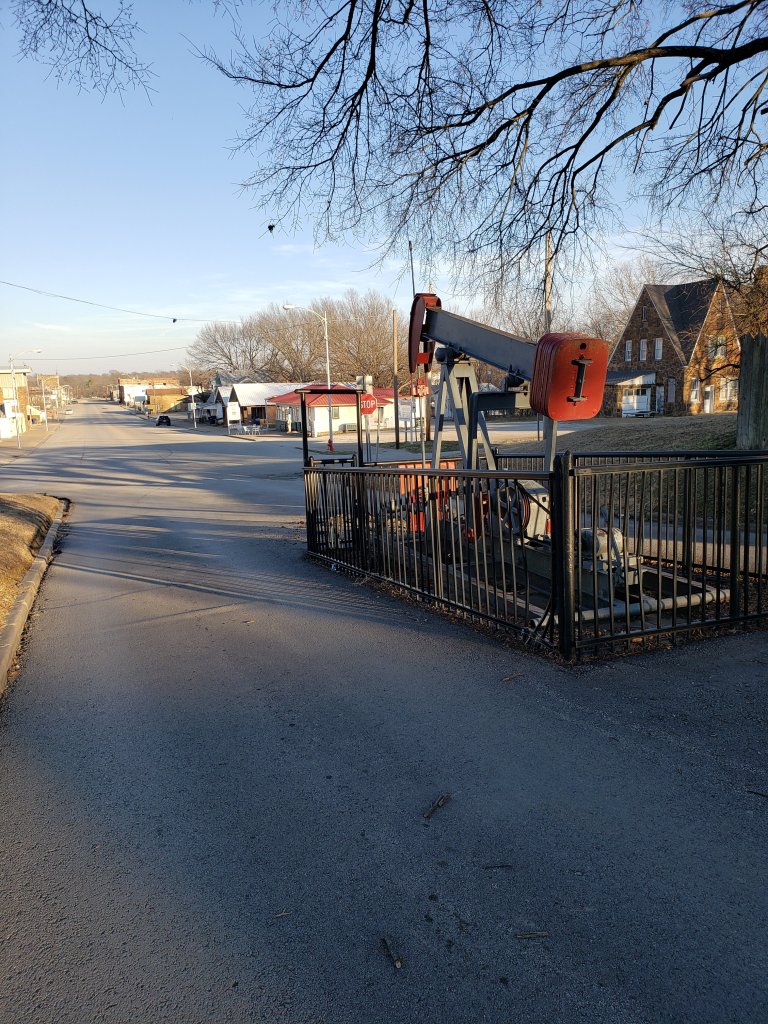
The well was dug in 1914 by the Indian Territory Illuminating Oil Company, later to become part of the Barnsdall Oil Field. The town was still known as Bigheart then, originally named for an Osage chief named James Bigheart, before Oklahoma had even become a state. With strikes in the first quarter of the 20th century, the oil business took over many towns like Barnsdall, which accounts for the name change in 1922 in honor of Theodore Newton Barnsdall and his oil and refining company.
The well toiled for decades, but stopped mid-pump in the early 1960s. For a while there was a little caution sign on the fence, warning that it could start up again at any time. It’s been over 50 years, but maybe it will start pumping again. And sitting as it does in the middle of Main Street, everyone in town will know if does.
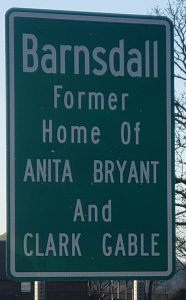
I’m always surprised to see who comes from the small towns. Barnsdall, Oklahoma is the home of Anita Bryant & Clark Gable!
The next sight I happen to spot by chance. On the street corner downtown, there are two conveniences. One you have probably seen before. The other one was new to me and maybe to you.
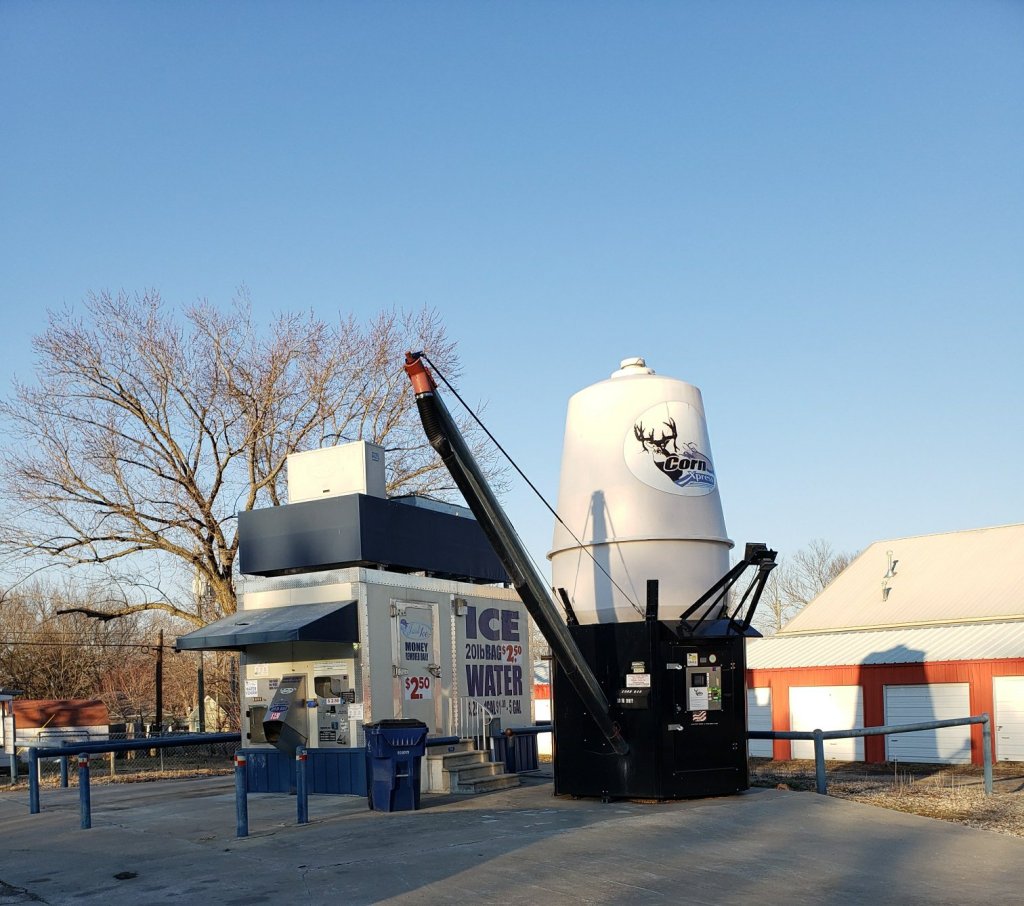
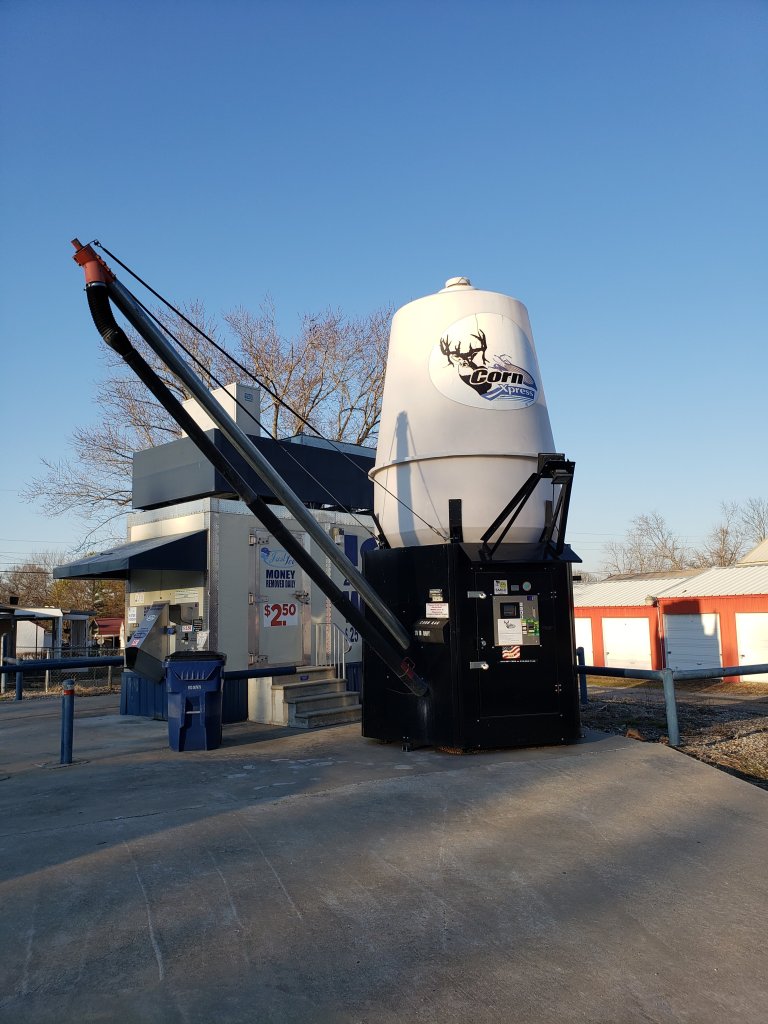
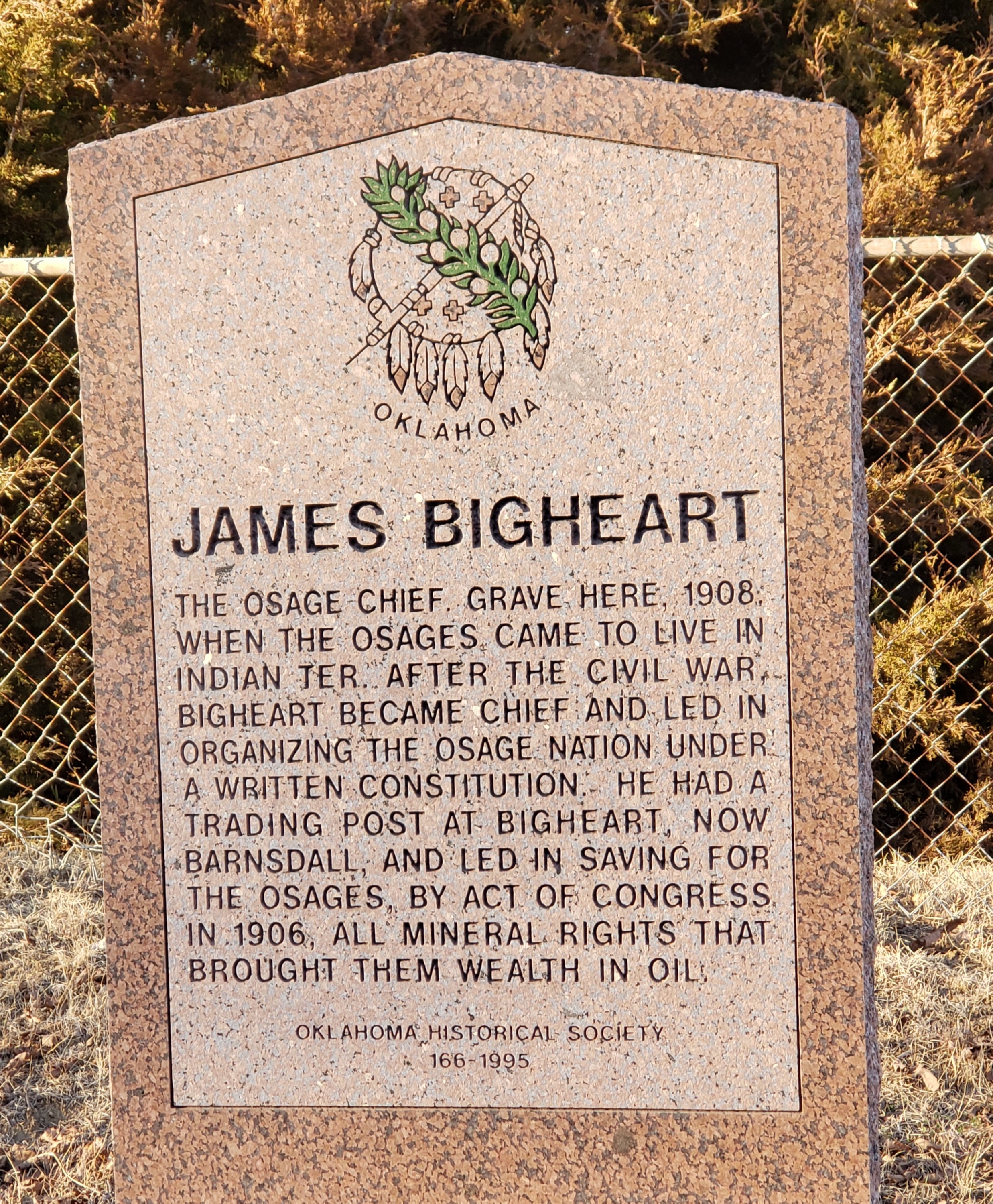
Leaving town, I spotted a highway marker paying tribute to Osage Chief James Bigheart.
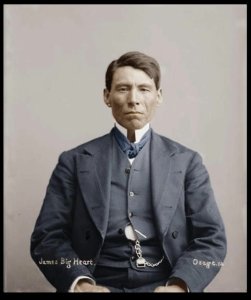
Orpha B. Russell wrote of James Bigheart:
Much has been written and published about the Osage people, commonly recognized as the wealthiest tribe of American Indians, yet the one man largely responsible for that wealth has had very little notice. Had James Bigheart chosen the “easy going ways” of his full blood Indian kinsmen’ his life would have been much less strenuous, but the Osages would not be enjoying their present position as one of the wealthiest Indian tribes in America.
Because he was the outstanding leader in his tribe during the four decades immediately preceding his death 2,229 enrolled Osages and their descendants have shared more than $300,000,000 from royalties, bonuses, leases, and rentals during the 44 years since his death. Ironically, “Big Jim” died and was buried October 5, 1908, just three months before his tribesmen received their first payment under the “headright” method he had worked out for them, but he had lived long enough to realize that his life-long dream, security for his tribesmen and their children, had been assured.
To learn more about the legacy of James Bigheart, click here.
 Camping with Christi
SO interesting, Christi! Thank you for sharing your adventures and discoveries ! What awesome memories you are making..
LikeLiked by 1 person
Very interesting. I like reading posts like this. It’s a mix of things to see and a bit of history.
LikeLiked by 1 person
Thanks, Betty! I enjoy putting them together. Hope you have a great day!
LikeLiked by 1 person
Very interesting! Thanks for sharing! Be careful and stay safe!
LikeLiked by 1 person
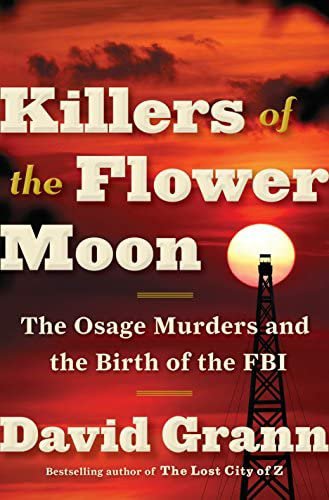
Wow! I love anything that pertains to Native Americans, thanks for the info. I did read the book, but will read it again as I have forgotten a lot of it. Safe travels, have fun and enjoy the country. Kathy
LikeLiked by 1 person
Another interesting sight!
MaryEllen
LikeLiked by 1 person
Hi Christie,
I was wondering how you do so much travel while you are house sitting?
LikeLiked by 1 person
Liz, I take daytrips where I am not away more than 4 or 5 hours. I don’t like to leave the dogs alone any longer than that.
LikeLike